Best UTV for Farm Work: Choosing a Work Side-by-Side
- on May 30, 2024
- Categories: Articles
The best UTV for farm work has low-range gearing, real four-wheel drive, and a bed you can load without thinking — not the highest top speed. Farm work is slow, heavy, repetitive, and done in mud and dust, and those conditions reward torque and traction over horsepower.
What farm work actually demands
A recreation UTV and a work UTV can share a chassis and still be very different machines. Work asks for six things:
- •Low-end torque — pulling a loaded bed up a wet slope at walking pace.
- •High and low range — low range multiplies torque for towing, hauling, and creeping through gates.
- •Selectable 4WD with a locking differential — farm traction problems are usually one wheel spinning in mud, and lockers solve what horsepower cannot.
- •A real cargo bed — preferably dumping, with sides you can throw feed sacks over.
- •A hitch — for a small trailer, sprayer, or drag. Check the rated capacity rather than guessing from engine size.
- •All-weather usability — a roof and windshield turn a fair-weather machine into one used in February.
Engine size for loaded hill work
An engine that feels fine empty on flat ground can be badly undersized once you add 400 lb of feed and a grade.
| Engine | Realistic work | Where it struggles |
|---|---|---|
| Under 200cc | Property runs, tools, light feed, fence checks | Loaded climbs, towing, deep mud |
| 200cc–300cc | Smallholding work, moderate loads, gentle grades | Sustained heavy hauling on steep ground |
| 300cc–450cc | Loaded beds, small trailers, hills, daily use | Little, at small-farm scale |
| 450cc+ | Heavy hauling, steep terrain, commercial loads | Cost and size on tight properties |
Start at 300cc for real work, and step up to 450cc with four-wheel drive if the property has hills, mud, or a trailer in regular use. Below 200cc, treat the machine as a property runabout, not a workhorse.
Why range and 4WD beat horsepower
Low range is the feature people miss until they need it. It lets a modest engine move a heavy load without cooking the clutch, and gives controlled speed coming down a loaded slope. A machine with high/low gearing and lockers will outwork a bigger single-range machine most days. Shaft drive is worth looking for too: less attention than a chain, better in grit.
Bed, hitch, and how you will actually load it
Check bed height and the tailgate before the capacity number. A bed you can slide a feed sack onto at hip height gets used; one you lift over gets avoided, and a dumping bed pays for itself the first time you move gravel. Braking, not pulling, limits a loaded UTV on a slope.
Gas or electric on a property
Electric utility vehicles are now genuinely practical for farm use, and the trade-off is clear.
| Gas | Electric | |
|---|---|---|
| Best for | Long days, remote acreage | Daily chores near a barn |
| Torque | Builds with revs | Immediate — excellent for loaded starts |
| Noise | Loud around livestock | Quiet; much better around animals |
| Refuel/recharge | Minutes | Hours; plan overnight charging |
| Maintenance | Oil, filters, belt, plugs | Far less routine service |
If the machine returns to the same building every night and works within a few miles, electric is often the better tool. For long days across large acreage, stay with gas.
Maintenance in dust and mud
Dust is what kills UTVs on farms, and the air filter is most of the story. Check it after any dusty job, not on a mileage interval.
- •Air filter — a clogged filter costs power and, eventually, an engine.
- •CVT belt and intake — keep the housing clean and dry; water crossings shorten belt life.
- •Grease points and boots — grease on schedule; check CV boots for splits after brush work.
- •Radiator and cooling fins — blow out chaff and mud, which pack in fast at harvest.
- •Tire pressure — matters more than tread pattern for load carrying and puncture resistance.
Where our machines fit — and where they do not
We should be direct. Motobuys sells value-tier utility side-by-sides, well suited to smallholdings, hobby farms, ranch chores, horse properties, hunting land, and as a second machine that saves miles on a truck.
They are not right for a large commercial operation running a machine eight hours a day with heavy loads and a service contract behind it. For that, a full-size work UTV from a major manufacturer with local dealer support is the honest recommendation — at several times the cost, for good reasons.
Four work-capable machines
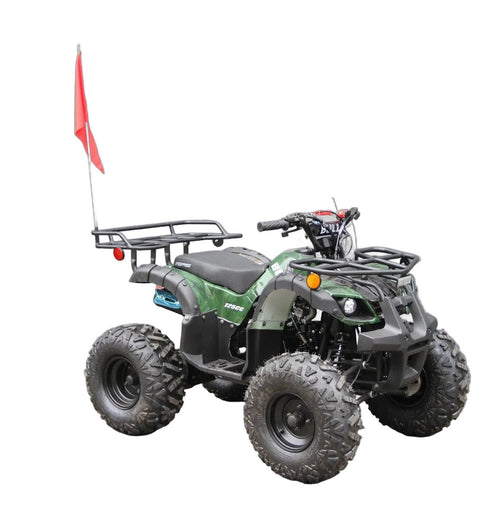
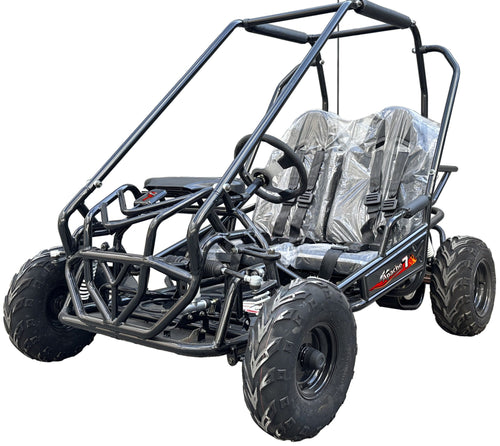
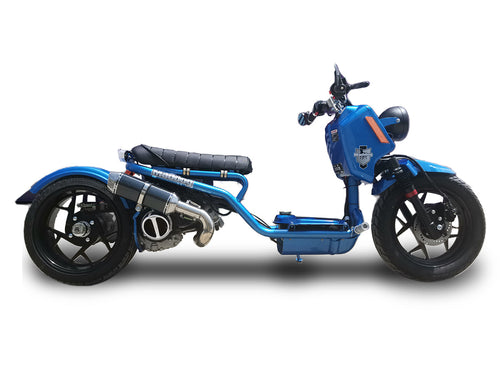
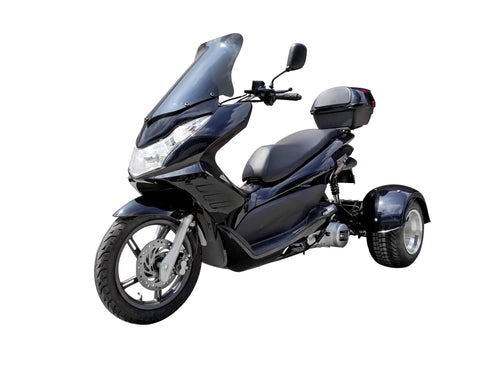
These step from a light property runabout to a 4WD machine with high and low range, plus an electric option for barn-based work.


TrailMaster Taurus 80ED-U Electric
72V electric · 200 lb dump bed · 10.5″ ground clearance
$12,999$15,599
ViewWhere the work is close to buildings or livestock, our electric UTVs are worth a look.
Choosing yours
Write down the heaviest thing you will move, the steepest ground you will move it on, and how far it goes from the barn. Those three answers set engine size, settle 4WD and low range, and decide gas versus electric — usually before you look at a model.
Frequently asked questions
What size UTV do I need for farm work?
Start at 300cc for real work — loaded beds, small trailers, hills — and 450cc with 4WD for heavier or steeper use. Under 200cc is a property runabout rather than a workhorse.
Is a UTV better than an ATV for farm work?
For hauling and towing, yes: a UTV carries a real cargo bed, seats a passenger, and has a hitch. An ATV is more agile on narrow trails and cheaper. Farms that carry loads regularly usually prefer a side-by-side.
Do I need four-wheel drive on a farm UTV?
If your ground gets muddy, has grades, or you tow, yes — and a locking differential matters more than raw power, since most traction failures are one wheel spinning. On flat, dry land, two-wheel drive can be enough.
Are electric UTVs good for farm work?
Yes, when it works within a few miles of a building with power. Electric gives immediate torque for loaded starts, runs quietly around livestock, and needs far less service. For long days across large acreage, gas is still the practical choice.
How much can a utility UTV carry and tow?
It varies widely by model, so check the manufacturer’s rated bed and towing figures rather than estimating from engine size. Bed height and whether it dumps affect real use more than the rating does.