Ice Bear MadDog Guide: Models, Top Speed and Specs
- on March 07, 2023
- Categories: Articles
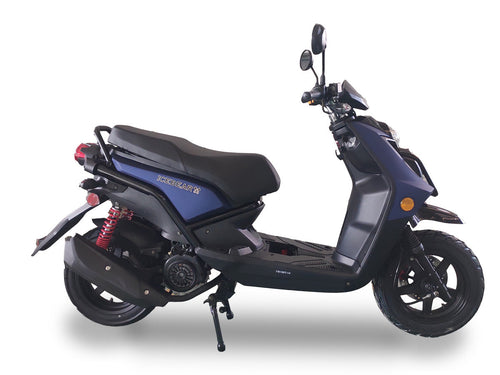
The Ice Bear MadDog is a Ruckus-style scooter built on an air-cooled GY6-clone engine, sold in 50cc and 150cc, in two-wheel and trike form. Ice Bear lists the 150cc two-wheeler at about 57 mph and the 50cc models at about 37 mph. Here is every version we stock and which one to buy.
How fast is an Ice Bear MadDog?
Top speed is the question most people arrive with, so here are the manufacturer figures for the models we carry, next to the specs that actually differ.
| Model | Engine | Listed top speed | Fuel tank | Brakes (F/R) | Price |
|---|---|---|---|---|---|
| MadDog Gen I (PMZ50-19) | 49.5cc air-cooled | about 37 mph | 1.2 gal | Disc / drum | $1,199 |
| MadDog Gen V 50 (PMZ50-22) | 49.5cc air-cooled | about 37 mph | 1.3 gal | Disc / drum | $1,599 |
| MadDog Gen V 150 (PMZ150-22) | 150cc air-cooled | about 57 mph | 1.6 gal | Disc / drum | $1,999 |
| MadDog Trike 50 (PST50-19N) | 49.5cc air-cooled | about 31 mph | 1.8 gal | Disc / disc | $2,199 |
| MadDog Trike 150 (PST150-19N) | 150cc air-cooled | about 40 mph | 1.8 gal | Disc / disc | $2,699 |
These are the manufacturer's figures, taken on level ground with a light rider. A full-size adult, a headwind or a long hill all pull the number down — a 150 that shows 57 mph on paper is realistically a comfortable 45–50 mph machine.
What a MadDog actually is
MadDog is a family of scooters from Ice Bear, not a single model. Every version shares the same recipe: an air-cooled single-cylinder four-stroke, a CVT automatic with nothing to shift, electric start with a kick backup, and a steel frame with most of the bodywork deliberately left off. The two-wheel models drive through a belt, which runs quieter than a chain and needs no lubrication; the trikes use a belt and chain together.
The styling is the reason it sells. The exposed frame, fat rear tire and low seat copy a look that is expensive to buy any other way, and the GY6 engine family behind it has a deep aftermarket. For more on the appeal and its limits, see why people like the MadDog and who should skip one.
MadDog generations: Gen I, Gen IV and Gen V
- •Gen I — the original short frame, closest to the Honda Ruckus shape, dual rear shocks, 12-inch wheels.
- •Gen IV — extended frame, dual LED headlights, aluminum alloy rims.
- •Gen V — extended frame, single round LED headlight, black alloy rims, cafe-racer handlebar, 14-inch wheels.
Ice Bear lists the same engine, brakes and DOT light package across all three, so the differences are frame length, wheels and trim rather than performance. A Gen I is not a slower bike than a Gen V of the same displacement; it is a different shape with a little less ground clearance.
50cc or 150cc: how to decide
Start with your route, not the price. A 49.5cc MadDog tops out near 37 mph, fine for neighborhood streets and short errands but slow enough to hold up traffic on a 45 mph road. The 150 holds 45–50 mph without straining, which makes it usable on ordinary city arterials. Neither is a highway machine. Both ship with a full DOT light package, a horn and a digital speedometer, are EPA approved, and in 50cc form are CARB-compliant for California.
Two wheels or three?
The trikes put the same engines on a wider rear end with disc brakes at both ends and a bigger 1.8-gallon tank. They are slower and heavier, but they stand up on their own at a stop, which is the point. The 150 trike also carries more rider weight — around 355 lb against roughly 240 lb on the two-wheel models — and adds a light-duty hitch.
Fuel, range and running costs
Ice Bear quotes roughly 80–100 mpg across the family. With tanks of 1.2 to 1.8 gallons, that is something like 90–140 miles of in-town riding between fill-ups. Servicing is basic: non-synthetic 10W-40 in a small crankcase, gear oil in the final drive, a drive belt that wears out, and a carburetor that needs cleaning if the machine sits on old fuel. Our scooter maintenance guide covers the intervals.
MadDogs we stock


Ice Bear Maddog (Rukus Style)- Gen I PMZ50-19- Standard lights
Gen I 50cc · the original short frame
$1,199$1,379
View
Honest ownership notes
The engines are carbureted, so cold mornings want the choke and stale fuel causes hard starting. The two-wheel models use a rear drum. Ground clearance is under five inches on small wheels, so broken pavement is unpleasant. Every one arrives crated at roughly 90 percent assembled: expect to fit the front wheel, fenders, handlebars, mirrors, speedometer and battery.
If you need a dealer down the street, a multi-year factory warranty and strong resale, a Honda or Yamaha scooter is the better machine, and it costs several times as much. The MadDog earns its place on price, looks and parts supply. For something more conventional from the same brand, see the rest of the Ice Bear range.
Frequently asked questions
How fast does an Ice Bear MadDog 150cc go?
Ice Bear lists the Gen V 150 at about 57 mph and the 150 trike at about 40 mph. Those are level-ground figures with a light rider; a full-size adult should plan on a cruise of 45 to 50 mph.
How fast is the 50cc MadDog?
About 37 mph for the two-wheel 50cc models and about 31 mph for the 50cc trike, per Ice Bear. Enough for neighborhood streets, not for roads posted at 45 mph or more.
What is the difference between the MadDog generations?
Frame length, lighting and wheels. Gen I is the short original frame on 12-inch wheels; Gen IV extends it with dual LED headlights; Gen V adds a single round headlight, black rims and a cafe-racer bar. Engine and brakes are the same.
Is a MadDog street legal?
They ship with a DOT light package and are EPA approved, and the 50cc versions are CARB-compliant for California. Whether you need an endorsement, plates or insurance depends on your state, so confirm with your DMV.
How far can a MadDog go on a tank?
Tanks run from 1.2 gallons to 1.8, and Ice Bear quotes roughly 80 to 100 mpg — about 90 to 140 miles of city riding.