The Best Off-Road Vehicles for Spring (And How to Wake Yours Up)
- on April 19, 2023
- Categories: Articles
Spring riding is two jobs. First, get the machine you already own running safely after months in a shed. Second, pick something that works on soft ground. For wet spring conditions a four-wheeler is the most forgiving choice for most riders — ground clearance, a wide footprint and low-speed torque — while a dirt bike is more capable in deep mud if the rider is up to it, and a low-slung go-kart is the first thing to get stuck.
Wake the machine up before the first ride
Nearly every spring breakdown traces back to one of six things. Work through them in order:
| System | What to do | Why it matters |
|---|---|---|
| Fuel | Fresh gas. If it was stored untreated, drain the tank and clean the carburetor bowl | Stale fuel and varnish are the number one reason a stored machine will not start |
| Battery | Charge fully, clean the terminals, replace it if it will not hold | Small batteries left over winter often do not come back |
| Tires | Set pressure cold, look for cracks, flat spots and slow leaks | Rubber loses air and ages while parked, and pressure changes the handling |
| Brakes | Check pad thickness and fluid, free any sticking caliper, adjust drums | Moisture rusts rotors and can seize a caliper over a winter |
| Chain or belt | Clean, lubricate and set tension; inspect a drive belt for cracks | A dry chain wears sprockets fast, and a cracked belt strands you |
| Fluids and filter | Change oil if it went into storage dirty, top up gear oil and coolant, inspect the air filter | Rodents nest in airboxes, and old oil is acidic |
Finish with a walk-around: re-torque axle nuts and handlebar or steering fasteners, work every cable and lever, check the lights, and start it in the yard before you trailer it anywhere.
Riding on soft, wet ground
Spring terrain is not the terrain you left in fall. Snowmelt swells creeks, frost heave loosens rock, and a trail that was hardpack in October can be saturated in April. A few things carry most of the difference:
- •Momentum, not throttle. Steady, moderate speed floats a machine across soft ground. Wheelspin digs a hole.
- •Drop tire pressure a little. A slightly softer tire has a bigger footprint. Do not go so low that a tire unseats.
- •Read water before you enter it. Spring crossings run deeper and faster than they look, and the bottom moves.
- •Do not ride a saturated trail. Ruts cut in April are still there in August, and trail damage is a common reason riding areas get closed.
- •Wash and dry afterward. Mud packs into radiators, brakes and chains, and holds moisture against metal.
Which machine handles spring best
| Machine | Spring strengths | Watch out for |
|---|---|---|
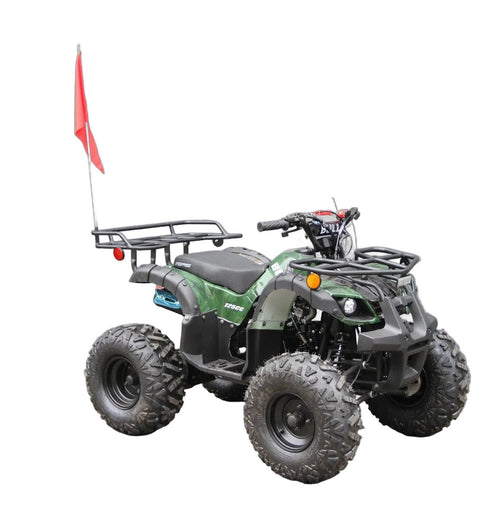
| ATV / four-wheeler | Clearance, a wide stable footprint, low-speed torque and easy to ride in mud | Weight can still sink it; 2WD needs a smarter line |
| UTV / side-by-side | Carries people and cargo, seat belts, good clearance, strong in mud | Heaviest of the group, so getting one unstuck is real work |
| Dirt bike | Lightest and most capable in deep mud in skilled hands | Least forgiving; a slippery root ends the ride quickly |
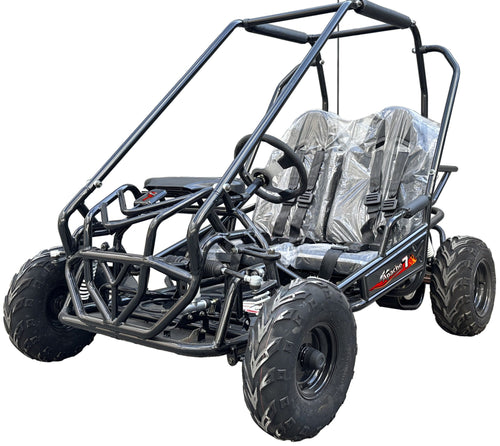
| Go-kart or buggy | Excellent fun on dry hardpack and gravel | Low clearance and small wheels make mud a hard stop |
If you want one machine that handles spring without asking much of the rider, that is a full-size ATV. If you want to bring somebody with you or haul fence posts while the ground is soft, it is a UTV. Our comparison of UTVs versus ATVs covers the trade-offs in detail.
What to prioritize if you are buying
- •Ground clearance and tire tread before engine size. Clearance is what keeps you moving in ruts.
- •Fuel injection if it is in budget. EFI machines start more easily after storage and in cold weather than carbureted ones.
- •Four-wheel drive only if you need it. It costs real money and adds weight. Most trail and property riding does not require it.
- •Electric start and reverse. Both get used constantly on wet ground.
- •Size to the rider. A machine that is too big is worse in mud, not better, because the rider cannot move it around.
Machines worth a look


The short version
Spend an hour on fuel, battery, tires, brakes, chain and fluids before the first ride and most spring problems disappear. Then match the machine to the ground: an ATV for forgiving all-round capability, a UTV when you need seats or cargo, a dirt bike when you want the challenge, and a kart for dry days. If you are still deciding, our ATV price guide and beginner ATV technique guide are the next two things to read.
Frequently asked questions
What is the best off-road vehicle for spring conditions?
For most riders, a full-size ATV. It has the clearance and footprint for soft ground and asks less skill than a dirt bike. A UTV is better if you need seats or cargo; a dirt bike is more capable in deep mud for an experienced rider.
Do I need a 4x4 four-wheeler for trail riding?
Usually not. Two-wheel drive handles most maintained trails and property riding if you pick sensible lines. Four-wheel drive earns its cost in deep mud, snow, steep loose climbs and working ground, and it adds weight and price.
How do I get an ATV running after winter storage?
Fresh fuel first — drain and clean the carburetor bowl if it was stored untreated. Then charge or replace the battery, set tire pressure, check brakes for sticking, lubricate the chain, inspect the air filter for nests, and change oil that went in dirty.
What tire pressure should I run in mud?
A little below your normal setting, so the tire spreads and floats rather than cutting in. Stay within the range on the sidewall or in the manual, and do not drop so low that the bead can unseat in a hard turn.
Is it bad to ride trails when they are wet?
Riding saturated trails cuts ruts that last for months and is one of the most common reasons areas get closed to off-highway use. Let the ground drain, ride gravel or sand in the meantime, and check whether the area has a seasonal closure.