Cheap Beginner Motorcycles: What Under $3,000 Actually Gets You
- on September 23, 2026
- Categories: Articles
The best cheap beginner motorcycle is a light 125cc to 250cc bike with a seat you can flat-foot. In our catalog that means about $980 to $2,200 new. Take the Motorcycle Safety Foundation course first, choose seat height before horsepower, and check the listing’s road-use notes for your state before you pay.
Almost every “best beginner motorcycle” list is built from the same handful of Japanese and European bikes, and all of them cost several thousand dollars more than the machines below. Those are fine bikes. They are also not what a lot of first-time riders can spend on a bike they might drop in the driveway the first week. This guide covers the other end of the market: the budget 125cc to 300cc street bikes and dual sports we sell out of Garland, Texas, what each one costs today, and what the listing actually says about riding it on the road.
What cc is good for a beginner motorcycle?
For most adults, 125cc to 250cc. A 125cc or 140cc bike is the gentlest place to start and is plenty for town streets. A 223cc to 250cc bike holds speed better on faster roads without being intimidating. Around 300cc, you get a bike you are less likely to outgrow in a season, with a bit more weight to manage at walking pace.
Displacement is only half of it. On a new rider’s first bike, seat height decides confidence more than engine size does. If you can put both feet flat at a stop, you will relax, and relaxed riders learn faster. A 35-inch dual-sport seat on a rider who is on tiptoe is a much harder first bike than a 250cc cruiser you can sit into.
Cheap beginner motorcycles we carry, by price
| Bike | Price | Engine | Transmission | Seat height | What the listing says about road use |
|---|---|---|---|---|---|
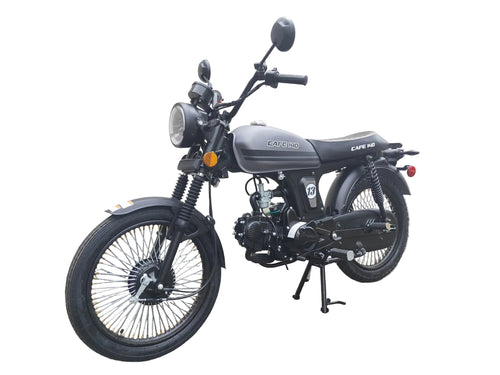
| RPS Cafe 140 | $979 | 140cc | 2-speed automatic | 29.9″ | EPA compliant; no clutch to learn |
| Vitacci Ostin 250 | $1,099 | 229cc | Manual | 30.7″ | DOT light package; listing says legal in all states except CA |
| Vitacci Majestic 250 | $1,149 | 229cc | Manual | 30.7″ | Complete DOT LED lighting |
| Ice Bear PBZ125-2 DLX | $1,249 | 125cc | 4-speed semi-auto | 28.7″ | CARB and EPA approved; ask us about road use in your state |
| RPS Condor 150 | $1,349 | 150cc | 5-speed manual | 31″ | Not CARB approved; listing says not legal in NJ |
| Tao TBR7D dual sport | $1,379 | 229cc | 5-speed manual | 34″ | Listing says not street-legal in CA, NY or NJ |
| Ice Bear Fuerza PMZ125-1 | $1,399 | 125cc | 4-speed manual | 28.3″ | EPA approved; title says California legal |
| Vitacci Raven 250 dual sport | $1,399 | 229cc | 5-speed manual | 35″ | Not CARB approved |
| Vitacci GTX 250 | $2,199 | 223cc | 5-speed manual | 31″ | DOT light package; not CARB approved |
| Vitacci Titan 250 EFI | $2,199 | 250cc | 6-speed manual | — | CA legal; factory VIN; DOT and EPA approved |
| RPS Cross Country 300 | $2,999 | 305.5cc | 6-speed manual | 34.1″ | Listing says it has the power to cruise at highway speeds |
Prices, engine sizes and transmissions from the live Motobuys catalog, as of September 23, 2026. Seat heights are read from each listing’s spec sheet. The last column quotes each listing, not a legal opinion; your state DMV has the final word. Only bikes available to order on that date are shown.
Automatic, semi-auto or manual?
If you have never ridden anything with a clutch, the cheapest shortcut is to not have one. The RPS Cafe 140 uses a two-speed automatic: twist and go, brake and stop. The Ice Bear PBZ125-2 is a semi-automatic, which means you still click through four gears with your foot but there is no clutch lever to stall. We break down the difference in what motorcycles are automatic.
Our take: if you plan to ride a bigger bike in a year or two, learn the clutch now on a cheap 250 rather than later on an expensive one. If you just want to get to work, the automatic is not a compromise. It is the right tool.
Street bike or dual sport for a first motorcycle?
A dual sport like the Tao TBR7D, Vitacci Raven 250 or RPS Cross Country 300 can ride a gravel road on the way home, and it shrugs off the tip-overs every new rider has. The catch is height. Those three sit at 34 to 35 inches, which is tall for a first bike unless you have a long inseam. A standard or cruiser like the Majestic 250, Ostin 250 or Cafe 140 keeps you closer to the ground and is easier in parking lots, which is where most beginners actually drop bikes.
Before you buy: license, course and paperwork
Plan to take the Motorcycle Safety Foundation’s Basic RiderCourse before the bike arrives, not after. According to the MSF, the course is built for beginners 16 and up, runs about five hours of learning plus ten hours of on-bike training over two days, and provides the motorcycle, helmet and gloves. The MSF also says most states waive the riding portion of the motorcycle endorsement test once you pass it. That means you learn on their bike, and your own bike never has to survive your first clumsy U-turn. Details are on the MSF Basic RiderCourse page. Your state DMV sets the endorsement rules, so check there for yours.
Paperwork is one of the most common questions first-time buyers phone in about. A new bike comes with a Manufacturer’s Certificate of Origin (MCO), the document your DMV uses to title it. Dealer-endorsed MCO/title processing is its own line item at checkout, typically $39, so add it when you order a bike you plan to register. For what makes a bike road legal in the first place, see our guide to street legal dirt bikes.
What arrives in the crate
Budget bikes come mostly assembled, not ready to ride. On the Ice Bear Fuerza, for example, the listing tells you to fit the front wheel, front fender, handlebars, mirrors and clutch lever, and to set up the battery. The RPS Cruiser 300 arrives about 90% assembled with the front tire and handlebars left to install. None of it is hard with basic tools and an afternoon, but if you have never torqued an axle nut, pay for assembly. Some listings offer a fully assembled option, and it is money better spent than a new front fender.
- •Check the chain before the first ride. Crated bikes often need slack adjusted.
- •Charge the battery fully even if it looks connected.
- •Budget for gear: a DOT helmet, gloves, a jacket and over-the-ankle boots. The MSF requires all of them for its course anyway.
Our picks for a first motorcycle
Never ridden, just want to get around town: RPS Cafe 140. The lowest price on this list, an automatic, and a 29.9-inch seat. Want to learn a real gearbox on a small bike: RPS Condor 150, rated 4.9 stars from 7 reviews, if you are outside California and New Jersey. Need California paperwork or more road speed: Vitacci Titan 250 EFI, which the listing states is CA legal with a factory VIN. You can compare everything else in street bikes, dual sports and enduros.


Frequently asked questions
What is a good cc for a beginner motorcycle?
For most adults, 125cc to 250cc. A 125cc to 150cc bike is the easiest to learn on around town, and a 223cc to 250cc bike holds speed better on faster roads. Choose seat height first: you should be able to put both feet flat at a stop.
How much is a motorcycle for beginners?
New budget beginner bikes in our catalog run from $979 for the RPS Cafe 140 to about $2,200 for a fuel-injected 250cc like the Vitacci Titan 250 EFI or GTX 250, as of September 23, 2026. Add gear, and MCO/title processing if you plan to register the bike.
What is the best motorcycle for beginners?
The one you can flat-foot, with a small, predictable engine, that is legal to register where you live. On a tight budget, a 125cc to 250cc standard or cruiser fits most new riders better than a tall dual sport.
Is an automatic motorcycle good for beginners?
Yes, if you mainly want transportation. An automatic like the RPS Cafe 140 removes stalling and clutch control from the learning curve. If you plan to move up to a larger bike later, learning a manual on an inexpensive 250 is worth the extra effort.
Do I need a license to ride a beginner motorcycle?
To ride on public roads you need your state’s motorcycle endorsement or license. The MSF says most states waive the riding portion of that test if you pass its Basic RiderCourse. Check your state DMV for the exact rules.
Not sure which one fits you? Call us at 877-667-6289 with your height and where you plan to ride, and we will tell you which bikes on this list make sense and which to skip.