Mini Bike Guide: Sizes, Speeds and the Best Mini Bike Brands
- on March 07, 2023
- Categories: Articles
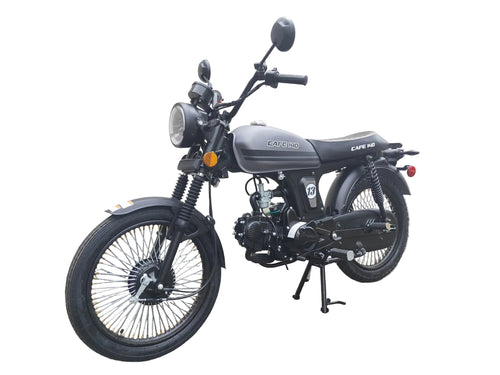
A mini bike is a small, low, simple machine: fat little wheels, a horizontal single-cylinder engine, and no gears to shift. It is not a shrunken dirt bike. Most run 20 to 35 mph, suit riders from about 10 years old through adults depending on size, and are built for flat trails, fields and property — not for motocross tracks or roads.
What a mini bike actually is
The modern mini bike descends from the 1960s Taco and Rupp machines: a short steel frame, a horizontal four-stroke engine of roughly 79cc to 212cc, and an automatic drive — a centrifugal clutch or a torque converter. You twist the throttle and go. Wheels are small, usually 10 to 14 inches, with wide low-pressure tires that do the cushioning on models without shocks. That simplicity is the appeal, and also the limitation: small wheels drop into ruts a dirt bike rolls over, and short suspension travel makes rough ground uncomfortable fast.
Mini bike vs dirt bike vs pit bike
These three get used interchangeably online, and they are genuinely different machines.
| Mini bike | Pit bike | Dirt bike | |
|---|---|---|---|
| Wheels | 10–14 in, wide and smooth | 10–14 in, knobby | 14–21 in, knobby |
| Transmission | Automatic, no shifting | Semi-auto or manual, 4 speed | Manual or automatic, geared |
| Suspension | None to short travel | Real forks and shock | Long travel, adjustable |
| Built for | Flat trails, fields, property | Pits, small tracks, yards | Trails, tracks, jumps |
| Learning curve | Lowest | Medium | Highest |
If the plan is jumps, whoops or a motocross track, a mini bike is the wrong tool and most tracks will not let one on. If the plan is a farm, a field, a gravel two-track, or several riders of different sizes sharing one machine, the mini bike is often the better buy.
Realistic speeds and rider sizes
| Class | Engine | Seat height | Typical top speed | Suits |
|---|---|---|---|---|
| Youth mini bike | 79–110cc | 20–23 in | 15–25 mph | Ages 8–12, supervised |
| Full-size mini bike | 196–212cc | 24–27 in | 25–35 mph | Older kids through adults |
| Kids dirt bike | 50–110cc | 21–26 in | 15–25 mph | Ages 5–12 |
| Pit bike | 110–140cc | 25–30 in | 30–45 mph | Confident riders, ages 10+ |
Where you can ride one
Mini bikes ship without lights, signals or a highway-legal title, and in nearly every state that means no public roads — including the shoulder and the road to the trailhead.
- •Private land you own or have permission to use. This is where most mini bike miles happen.
- •Designated OHV areas and state trail systems. Many require a registration sticker and a spark arrestor, and some set a minimum age.
- •Off-road parks with a kids or mini bike loop. Call first; some exclude machines without full suspension.
- •Not sidewalks, parks or neighborhood streets. That is the fastest route to an impounded bike.
Mini bikes worth a look


The full-size minis built for adult riders are grouped under adult mini bikes.
What separates a good mini bike from a bad one
People ask who makes the best mini bike. The honest answer is that most brands you will compare — TrailMaster, Coleman, Massimo, Monster Moto and others — source from a small number of overseas factories and share much of their design. Chasing a brand name is less useful than checking these.
- •Brakes. The single biggest difference. A rear-only band brake is the budget answer; front and rear disc brakes are a real safety upgrade and worth paying for.
- •Torque converter or plain clutch. A torque converter gives far better hill climbing and low-speed control. A centrifugal clutch is cheaper and slips more under load.
- •Suspension. Rigid frames are fine on a smooth field and punishing on anything else.
- •Frame and hardware. Check weld quality in photos, and expect to re-torque every bolt after the first hour either way.
- •Parts support in the US. Ask who stocks the carburetor, chain, clutch and cables. A cheap bike you cannot get a throttle cable for is not cheap.
Value-tier mini bikes, ours included, are honest machines for property use, first riders and second bikes. They are not built to the standard of a Japanese trail bike, and a serious teenage rider will outgrow one. That is the right trade for many families and the wrong one for a few.
Maintenance basics
- •Re-torque after the first ride. Axle nuts, engine mounts, handlebar clamps and sprocket bolts all settle in the first hour.
- •Change the oil early. First change around five hours, then every 20 to 25. These engines hold little oil, so checking the level beats watching the calendar.
- •Clean the air filter. Dust kills these engines faster than anything else.
- •Chain and tires. Keep about half an inch of chain slack and check tire pressure — low-pressure mini bike tires read very differently from a car.
- •Fuel. Fresh fuel, plus stabilizer if the bike sits. A gummed carburetor is the number one winter problem.
Frequently asked questions
What is the difference between a mini bike and a dirt bike?
A mini bike has small wide wheels, an automatic drive with no shifting, and little or no suspension. A dirt bike has larger knobby wheels, long-travel suspension and a geared transmission built for rough ground and jumps.
How fast does a mini bike go?
Youth models run about 15 to 25 mph. Full-size 196cc to 212cc mini bikes typically reach 25 to 35 mph on flat ground, less with a heavy rider or a hill.
What age is a mini bike for?
Youth-size mini bikes suit supervised riders from about eight. Full-size 200cc machines suit older kids, teens and adults, and are commonly rated to around 220 to 250 pounds.
Who makes the best mini bike?
Most brands in this price class share factories and designs, so compare specs instead: front and rear disc brakes, a torque converter rather than a plain clutch, real suspension, and US parts availability.
Can you ride a mini bike on the road?
No. Mini bikes ship without lights, signals or a street title and are off-road only in nearly every state. Ride on private property or in designated OHV areas.