Kids Dune Buggies and Go-Karts: A Parent's Buying Guide
- on June 29, 2023
- Categories: Articles
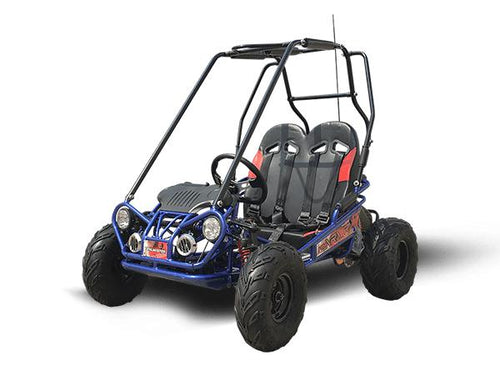
For kids, a "dune buggy" and a "go-kart" usually mean the same thing: a small off-road vehicle with a roll cage, seat belt and steering wheel. The decision that matters is not what it is called — it is matching the size and speed to the child, and being able to limit both.
Go-kart or dune buggy — is there a difference?
In the youth market the terms overlap almost completely. Buggy usually implies taller suspension and a more rugged look; kart usually implies a lower, flatter frame. Both have a cage, belts and a steering wheel, and both are driven the same way. Judge the machine by its specifications, not its label.
Sizing by age — the part that actually matters
| Age | Class | Typical engine / power | Typical top speed |
|---|---|---|---|
| 3 – 6 | Electric mini | 24 – 36V electric | 5 – 10 mph |
| 6 – 10 | Mini kart / buggy | up to 100cc, or 36 – 48V | 10 – 15 mph |
| 10 – 14 | Mid-size | 100 – 125cc | 15 – 25 mph |
| 14+ / small adult | Full size | 150 – 200cc | 25 mph and up |
Speeds vary by model, terrain and rider weight. Treat these as planning ranges, not specifications.
Five things to check before you buy
- •Adjustable speed limiter. The most valuable feature on any youth machine. It lets you start slow and raise the ceiling as skill grows.
- •Reachable pedals with the seat forward. If a child has to stretch, they cannot brake properly.
- •A full cage, belts and nets or doors. Arms and legs need something keeping them inside.
- •Reverse. Sounds trivial until a small child is stuck against a fence and cannot get out alone.
- •Electric or gas. Electric is quiet, needs almost no maintenance, and is limited by battery life. Gas runs as long as you keep fuel in it but needs upkeep and makes noise.
Electric or gas for a young child?
| Electric | Gas | |
|---|---|---|
| Noise | Nearly silent | Loud |
| Run time | Battery limited, then charge | Refuel and continue |
| Maintenance | Minimal | Oil, filter, fuel system |
| Speed ceiling | Lower | Higher |
| Best for | Ages 3–8, yards, neighbors nearby | Ages 8+, acreage, longer sessions |
For a first machine under about age eight, electric is usually the better experience for everyone in the household.
Where kids should ride
- •Open, flat, familiar ground with clear boundaries you have walked with them first.
- •Away from water, drop-offs, roads and driveways.
- •Never on public roads — these machines are not street legal.
- •With an adult present and within sight, every time.
- •Check local rules. Some areas restrict off-road use even on private land.
Kid-sized machines to start from


Trailmaster Eagle Mini XRX/R+ Go Kart with Reverse Best Seller. Up to 10 years Old
Mini with reverse
$1,549$1,849
View
The first ride
Set the limiter to its lowest setting. Walk the boundary together before the engine starts. Have them practice stopping on command in an open area until it is automatic — brakes first, throttle second. Then let them go, and raise the speed only when the stopping is reliable.
Frequently asked questions
What is the difference between a kids go-kart and a dune buggy?
In the youth market almost nothing. Buggy usually implies taller suspension and a rugged look, kart a lower flatter frame, but both have a cage, seat belt and steering wheel and drive the same way.
What age can a child drive a dune buggy?
Electric minis suit ages 3–6, mini karts around 6–10, mid-size 10–14, and full-size machines 14 and up. Fit and a working speed limiter matter more than the number.
How fast do kids dune buggies go?
Electric minis run about 5–10 mph, mini karts 10–15 mph, and mid-size machines 15–25 mph. Most youth models include an adjustable limiter so you can start lower.
Should I buy electric or gas for a young child?
Electric for most first machines under about age eight — quiet, low maintenance and naturally speed limited. Gas suits older kids, larger properties and longer sessions.
Are kids dune buggies street legal?
No. Youth go-karts and buggies are off-road machines and are not legal on public roads. Check local rules for private land use as well.